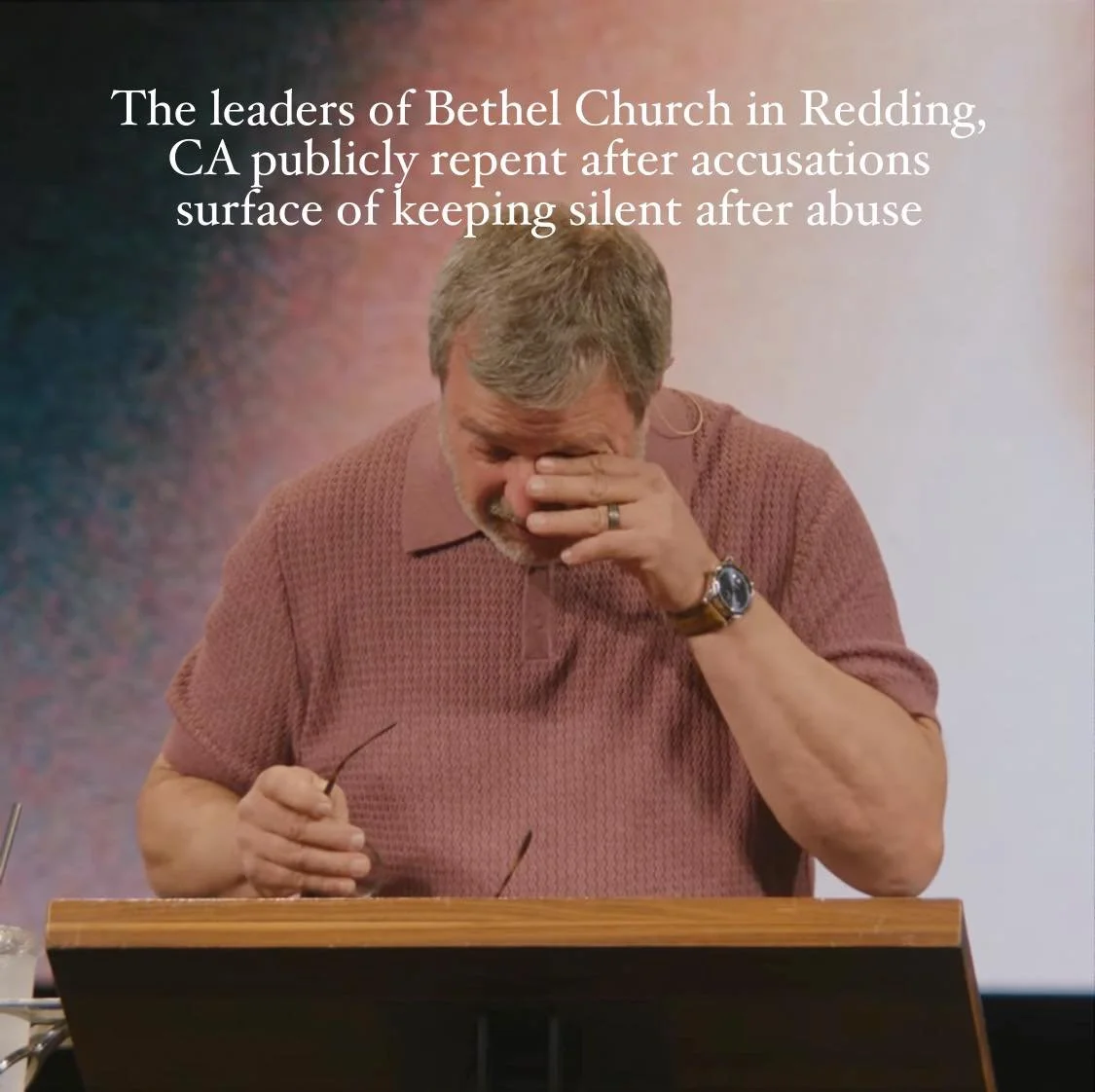
Bethel’s Repentance
I watched Bethel’s full service from this past weekend, which was devoted to repentance for a lack of transparency and for withholding known truths regarding serious allegations involving a ministry partner, Shawn Bolz. These allegations—including the use of social media data to fabricate false prophetic words and matters related to sexual assault—were publicly exposed last week by Mike Winger in a detailed five-hour presentation. If you haven’t watched Mike’s video or Bethel’s public repentance, I would encourage you to do so. Links are below.
It’s important to say at the outset that I share Mike’s conviction that the criticism directed at Bethel and Shawn Bolz is not an attack on the charismatic church as a whole. There are countless faithful believers within charismatic churches—many of whom I dearly love as brothers and sisters in Christ. In most cases, disagreements are about practice and application, not the gospel itself or the authority of Scripture.
I actually grew up in charismatic contexts and was shaped by much of its worship and culture, even though my own faith journey has taken on more of a baptist expression. I am not anti-miracles. I am not anti-gifts. I am anti-error, as best as Scripture—historically and contextually interpreted and faithfully applied—allows us to identify it. I think most of us, charismatic or not would agree that when something is demonstrably unbiblical, Scripture must always have the final word—even if we don’t like it.
That is where my concerns—and the concerns of many other believers—regarding Bethel have arisen. And yet, as someone who has been publicly critical of Bethel’s theology and ministry practices for over a decade, I want to say this plainly:
I was genuinely encouraged by what I saw.
I don’t want to speculate about motives. Some will argue that Bethel only responded because Mike Winger’s video left them with no alternative. That may be true. That was my first instinct as well, and I even said that to a friend, but I actually think that’s the wrong approach—especially now after having my wife’s motives questioned within her repentance.
The reality is, like Ashley, they still could have remained silent and waited for the attention to fade. They still could have minimized the situation, shifted the blame, reframed the narrative, or issued a brief, carefully worded statement meant to make the problem go away. So many churches do exactly that in moments like this.
Instead, what I saw were leaders who appeared broken and sober-minded—leaders who named specific failures, addressed specific accusations, and took responsibility without deflection. The repentance did not feel easy or rehearsed. It felt weighty. They brought their own sins center stage at their church. That matters.
At the same time, it’s important to say this clearly: repentance, even when genuine, does not automatically restore trust. Scripture calls us to rejoice when sin is brought into the light, but trust is rebuilt over time through consistent fruit. Those two things must not be confused.
Because of that, I do have strong convictions about what biblical accountability and church structure should look like moving forward, and I believe those conversations are necessary. But for this moment, I believe it is right to acknowledge what was done Sunday.
When leaders of a large and influential church openly admit failure, repent of sin, and commit themselves to change, that step into the light matters. “If we walk in the light as He is in the light…”—that is not insignificant.
I commend these leaders for their public repentance, and I commend the leadership board for allowing it to happen.
My prayer for Bethel going forward is threefold:
1. Discernment & Biblical Fidelity
Partnering with someone who intentionally fabricated “words of knowledge” using social media data reveals a serious lack of biblical discernment at best. Bethel’s emphasis on signs and wonders has too often functioned apart from—rather than under—the authority of Scripture. With a faithful understanding of how God speaks today, a partnership with Shawn Bolz would’ve never occurred.
I believe it can be demonstrated that Bill Johnson and Kris Vallotton have consistently taught serious error—at times even heresy—in their elevation of experiences, angels, voices, dreams, visions, and miracles in ways that place them in contrast with the authority of Scripture. My prayer is that they will repent not only of actions and inactions, as they have now done, but also of the theological frameworks that made those failures possible, and that Scripture will once again govern belief and practice.
2. Accountability & Transparency
Repentance requires more than words. It must be supported by real accountability, meaningful transparency, and consistency over time—especially in leadership. Scripture is clear that teachers will be judged more strictly, and greater influence brings greater responsibility. I pray Bethel establishes processes that truly uphold the repentance they have expressed, even if that repentance comes at real cost.
I’ve seen questions about why Shawn did not appear on the platform. The answer is simple: he is unrepentant. Unrepentant sinners should not be elevated before a congregation, just as repentant sinners should not be excluded from it. Repentance, as a gift from God, is not only for the sinner but also for the good of the church. Perhaps that time will one day come—not to restore him to his platform, but to absolutely restore him to fellowship. I pray for that.
I believe this moment was genuinely healing for Bethel’s congregation. Genuine repentance, if it is so, cannot be manufactured. Like salvation, it is a work of God. Psalm 51 shows us that when repentance is real, peace is restored between the sinner and God, and that repentance becomes a witness to others—an open invitation to come into the light and find mercy.
When protecting a brand or controlling a narrative takes priority over repentance, churches remain bound in sin. When repentance is allowed to be seen, it sends a different message: You can come clean too. That is gospel reconciliation on display. Time will reveal the fruit of Bethel’s repentance—as it does with any repentant sinner—but the calling of believers is to fan repentance into flame, and we should pause before sneering at it.
And you know what happens after true repentance? …More repentance. The path of coming into the light leads us all the way to the core of who we are—so I’m praying there’s more to come. Repentance for their relationships with other false teachers as well as the false theology they themselves have taught.
3. Repair & Care for the Harmed
My prayer is that those who were harmed—especially those affected by Bethel’s prolonged silence—will be cared for in tangible and sacrificial ways. Whether through counseling, advocacy, or legal support as victims pursue justice against Shawn Bolz, I pray Bethel’s expressed concern for victims is followed by faithful action. I was encouraged by Bethel’s establishment of the Safe Church initiative and by creating pathways for people to raise concerns without fear of retaliation—something every church should adopt.
It’s no secret how quickly abuse can take root when churches are managed like corporations rather than shepherded as Christ intends. When the secular overtakes the sacred, church members and staff become vulnerable to bullying, intimidation, isolation, retaliation, and spiritual abuse when wanting to either come clean or call out a violation. So often, Scripture’s directions on these matters are ignored, and it’s not because they’re unclear.
I pray for the victims of Shawn Bolz and for those harmed by Bethel’s silence, and I am encouraged that Bethel is now acknowledging that harm. Truly—and I say this without cynicism—when repentance comes, it is always better late than never. The consequences of delay are excruciating and real, but every step into the light is always a win.
- - - - - -
To be clear, I am not suddenly encouraging people to begin listening to or following Bethel. Unless there is demonstrable and sustained movement from theological error toward biblical faithfulness, I would still strongly advise against it. That said, I am thankful for what I witnessed. It was rare and, in many ways, unprecedented. I’m also grateful for the work of Mike Winger in bringing truth into the light—Bethel even publicly thanked him, and that matters.
I don’t demand that Bethel adopt my personal stream of theological understanding, but perhaps this moment marks the beginning of real cleansing and renewal—an act of loving discipline from the Spirit of God, breaking what must be broken in order to heal what can still be restored.
This story is not over, and of course, time will tell—but whenever sin is exposed and brought into the light, God is glorified.
Links to videos:
Mike Winger’s Video on Shawn Bolz and Bethel:
https://youtu.be/GH05S53QlY0?si=RLyOGi4sbqNrCtHA
Bethel Repentance Service:
https://www.youtube.com/live/QMywWJY5azQ?si=l3-eHv0jjCYodaw4