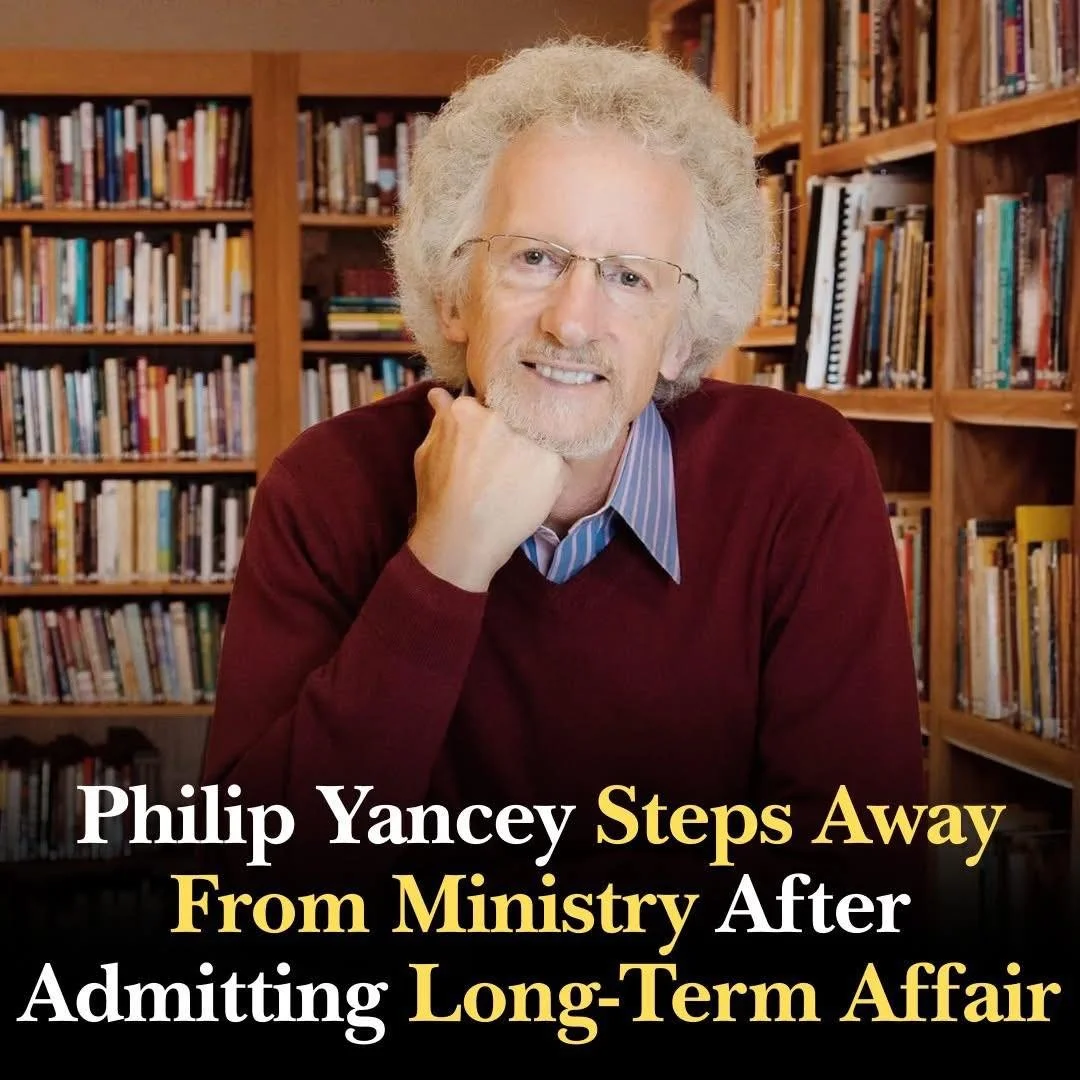
The Phillip Yancey Affair
When I read the news of Phillip Yancey confessing to an affair and stepping down from ministry, my heart broke. Not only because I’ve read and benefited from much of his writing—some of it required reading during seminary—but because of what my family and I have personally walked through in recent months. I felt the familiar ache of grief that comes when sin fractures what once felt stable, trusted, and good.
My heart especially ached for his wife. Her words—honest, restrained, and full of pain—rang painfully true as she described rebuilding with her spouse while carrying a reality she never chose. I recognize that torment. I know the disorientation of waking up inside a story you didn’t write and never wanted.
What troubled me most, though, was not simply the sin that was confessed, but the response that followed. I saw some of the harshest judgment I have ever witnessed. Assertions that his repentance was not genuine but merely strategic. Speculation rooted in health concerns, timing, and assumed motives. Even harsh judgements toward his wife for staying. From Christians and church leaders!
I received some of that in my situation too, so this is where I believe we must stop and take a breath. My wife was also accused of her repentance not being genuine by people I once greatly respected— suggestions that her repentance was calculated and manipulative rather than sincere. These comments came without even having a conversation with her. That mindset probably would’ve been my temptation in these situations before walking through it, but after nearly six months of daily, costly work toward rebuilding, I can say with confidence that only God and those who walk closely with her every day are truly positioned to discern that fruit. The same is true for Philip Yancey. I read several responses from writers who made thoughtful points, but still fundamentally and painfully missed the gospel. So I want to name a few things clearly.
First, betrayal is always wrong, and the responsibility always lies with the betrayer. No spouse ever deserves infidelity—under any circumstance. Even in the most broken marriages, betrayal is not justified. Many who have been betrayed immediately turn inward, asking relentless questions: What if I had been better? More attentive? More attractive? More present? Those questions are understandable, but they miss the truth. Christ himself was betrayed by both Judas and Peter. We clearly see this as reflective of their character and sin, not that of Christ.
Infidelity is not born from love nor is it ever a noble exit from a difficult marriage—it is born from avoidance. From choosing escape instead of honesty. From numbing pain instead of facing it. There is a reason that only a tiny fraction of relationships that begin as affairs ever survive. What masquerades as love is often limerence—a romantic illusion sustained by secrecy, ego, fantasy, and self-deception. If you are caught in that web now, the most loving thing you can do—for yourself and for others—is to step into the light.
Second, while infidelity is always destructive, it does not arise from a single, simplistic cause. In the Yancey situation, we were given very little information, yet people rushed to conclusions anyway. In my own story, we chose to share more detail—not to justify sin, but to help people understand how it unfolded. We were criticized for that as well. It only reinforced a hard truth: you cannot satisfy public opinion.
Some assumed that Yancey’s confession was prompted by being caught; others assumed manipulation. The truth is, we just don’t know. And we should be deeply cautious about filling in the gaps with suspicion. Ultimately, whenever God exposes sin—no matter how painful—that exposure…is grace. Grace for the sinner to repent and finally walk in freedom. Grace for the spouse to no longer live inside a lie. We often treat discovery as the beginning of scandal, when in reality it is the end of a long road of destruction—and potentially the beginning of a difficult but beautiful road toward healing.
Finally, the church must learn how to walk through these moments better. Infidelity is tragically common, and it shows no favoritism. Pastors, worship leaders, authors, executives, police officers, stay-at-home moms—none are immune. When the conditions are right and vigilance is low, any one of us is capable of choosing sin.
What shocked me most in the Yancey confession was not the fall, but the posture of many leaders responding to it. The harshness. The speed. The absence of humility. Pastors are not called to be police officers setting traps and enforcing the law like the Pharisees did. They are called to be firemen—running into burning buildings to rescue people from the flames. When church leaders become suspicious of repentance or eager to publicly dissect sin, it does not demonstrate theological depth. It reveals a shallow grasp of the gospel.
True repentance reveals itself over time. The church’s role is not to exile sinners at the first confession, but to surround them with accountability, truth, and grace—to fan repentance into flame, not smother it. This does not mean ignoring consequences. Scripture is clear that consequences matter. But consequences are meant to be redemptive, not rejecting. Firm, but restoring. Clear-eyed, but hopeful.
When pastors act like police instead of shepherds, all they do is reinforce humanity’s instinct to hide. Ashley lived every day in fear that if she came clean, she would be cast out. That fear is not unusual—it’s common. Even Adam and Eve—the first thing they did was cover themselves and hide when they sinned. Many believe that if people truly knew them, grace would evaporate and only punishment would remain. The church must learn a better way: consequences with grace, consequences without rejection, consequences aimed at restoration. When leaders assume the role of judge rather than servant, they forget their own need for mercy and quietly place themselves on God’s throne. That posture is not protective—it is proud, harmful, and profoundly unlike Christ.
To be set free by Christ is a miracle. My wife can now worship Him freely, no longer living under the weight of shame. I pray that Phillip Yancey and his wife experience the long, patient, and ultimately fruitful work of rebuilding trust. I hope they are being surrounded right now by a community of faithful believers that long to see gospel reconciliation in his life like we all want for ourselves. This is the gospel at work—grace that heals, and redemption that restores.
This is not about excusing sin. It is about embodying the gospel we claim to believe.